.png)
Democratizing access to scholarly works - Sparking curiosity and connection!
Beta launch! An interdisciplinary, accessible magazine for high school and undergraduate students to learn about, engage, and promote frontiers of neuroscience intersections with art, psychology, anthropology, assistive tech, AI, law, and policy. Students will write easy-to-understand summaries and design social media posts after reading research papers, articles, and scholarly books. Follow us on Instagram and submit the form below.
Examples of interdisciplinary research papers or articles below. You can choose to summarize of these or bring your own. Fill the form above. Launching in fall 2026.
Untangling the connection between dopamine and ADHD

Brain imaging has helped researchers understand the role of dopamine in ADHD. Credit: JohnnyGreig/Getty
The portrayal of ADHD as a dopamine deficit is common in popular media, but it can lead to an oversimplified and even harmful view of the condition, MacDonald says. “It can potentially lead to the message that low is bad, more is good, and even more is better.” Dopamine clearly has a role in the neurological misfiring that underlies ADHD. But researchers have only started to unveil the complex biological mechanisms that connect this essential neurological molecule to the condition — an understanding that could point to more-effective therapies, says Faraone. “We’re at the very beginning of understanding it.”
A high-performance brain–computer interface for finger decoding and quadcopter game control in an individual with paralysis
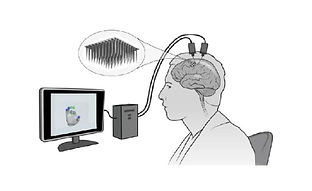
A computer display is placed in front of the participant so that he can perform a finger task with a virtual hand
People with paralysis express unmet needs for peer support, leisure activities and sporting activities. Many within the general population rely on social media and massively multiplayer video games to address these needs. We developed a high-performance, finger-based brain–computer-interface system allowing continuous control of three independent finger groups, of which the thumb can be controlled in two dimensions, yielding a total of four degrees of freedom.
Relationships Between Arts Participation, Social Cohesion, and Well-Being in 18 US Communities: A New Theory of Change Open Access

Installation design for Empathic Fabric. (© Fanjing Meng)
This article describes a study of One Nation/One Project, a national post-pandemic arts-and-public-health initiative in the US. This values-based, convergent mixed-methods study found significant associations between arts participation, social cohesion, and well-being and offers a theory of change that illustrates these associations, as well as how arts participation increased social cohesion and enhanced well-being. At a moment when the severities of social divisions and loneliness are increasing in the US, this theory of change may enhance socia cohesion and well-being by encouraging cross-sector collaboration between the arts, public health, and municipal sectors and supporting investment in the arts.
Why teens with ADHD are so vulnerable to the perils of social media

Adolescents with ADHD are particularly prone to using social media long into the night. Credit: golubovy/Getty
For many young people with the condition, screen interactions are especially hard to resist — and intensify the mental-health challenges they face. For many parents, prying a teenager’s eyes from TikTok or Instagram is a nightly battle. For those whose children have attention deficit hyperactivity disorder (ADHD), it can feel like a never-ending war.
Adolescents with ADHD are particularly prone to long hours of compulsive scrolling, the result of differences in how their brains regulate attention and reward. They are also disproportionately likely to use social media in dangerous ways — sharing personal information, engaging in risky interactions and staying online deep into the night — to the detriment of schoolwork, sleep, friendships and general well-being.
Why ADHD goes undiagnosed in girls

Credit: Ben Michelman
Attention deficit hyperactivity disorder (ADHD) is harder to detect in girls than in boys. Julia Schechter, a clinical psychologist at the Duke Center for Girls & Women with ADHD in Durham, North Carolina, explains why girls with ADHD are harder to diagnose, and how undiagnosed girls face higher risks of bad outcomes than boys do, ranging from relationship issues to eating disorders and self-harm.